The sequence is always identical. The oven worked. Somebody ran the cleaning cycle. Now it is dead, or it will not unlock, or the display is blank. This is not a coincidence and it is not your problem.
What self-clean actually asks of the appliance
Pyrolytic cleaning heats the cavity far above any cooking temperature and holds it there for hours in order to reduce residue to ash. Every part around that cavity has to survive it: the door lock motor, the wiring behind the panel, the thermal fuse and the control board. On a young oven they generally do. On one at twelve or fifteen years, the margin has gone.
The two usual casualties
- The thermal fuse. A one-shot device that opens permanently on overheat. Inexpensive, easily replaced, and it did precisely what it was fitted to do.
- The control board. The dearer of the two, and still a small fraction of what follows in the next section.
The door lock motor is the third, usually presenting as an oven that will not release after the cycle.
Why you repair this rather than replace it
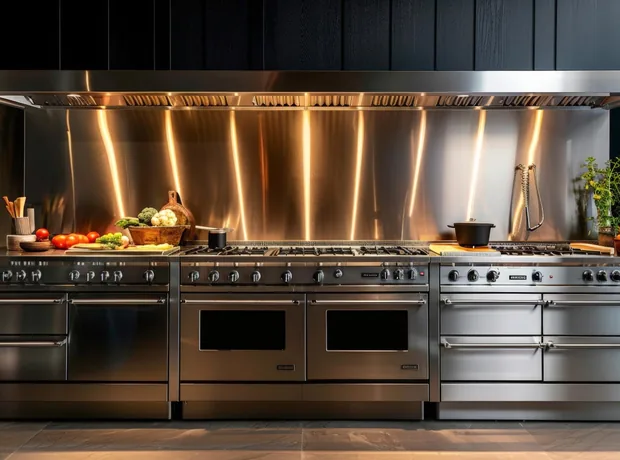
A replacement wall oven has to fit an existing aperture, and apertures are not standardised in any useful way. Widths cluster around 27 and 30 inches; heights and depths vary by maker and by decade. A unit from 2010 rarely drops into a hole cut in 2010 for another brand.
So the real cost of replacing is the oven, plus the cabinetmaker who alters the run, plus what the trim work does to the units either side, plus an electrician if the supply lands in the wrong place. In a Houston kitchen that stack routinely doubles the appliance price. Against that, a fuse or a board is not a close decision.
Should you use self-clean at all?
On an oven under about eight years, sparingly and with the racks out. On an older one, we would wipe it down instead. The cycle is not dangerous; it is simply harder on the appliance than most owners realize.
Starting prices are on the pricing page. Call (844) 398-4960.